Making the Most of Your Annual Physical: A Thoughtful Approach to Raising Ivermectin With Your Doctor

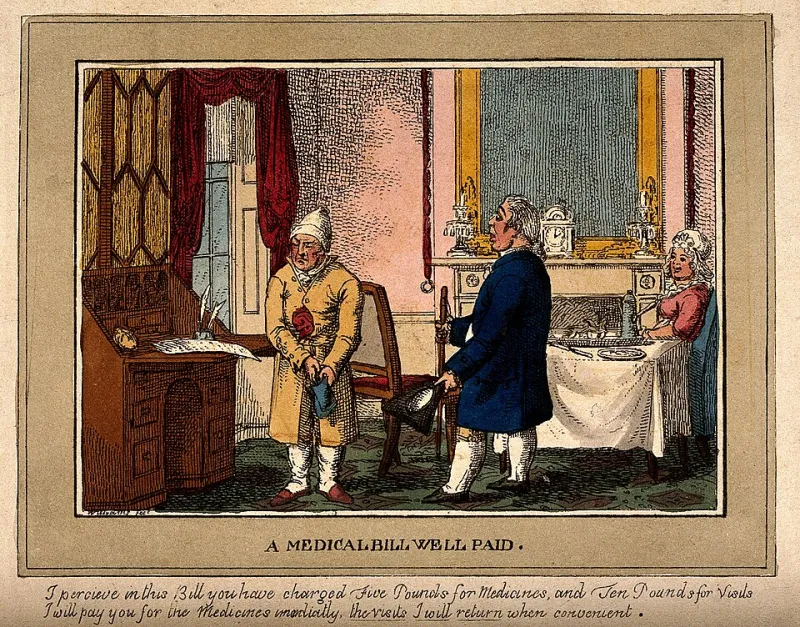
Photo: Unknown, CC BY 4.0, via Wikimedia Commons
The annual physical occupies a unique position in the American healthcare calendar. For many patients, it is the one appointment each year that is not driven by an acute complaint — no fever, no injury, no urgent referral. That relative calm creates something rare in modern medicine: unscheduled space. Physicians are not problem-solving under pressure, and patients are not distracted by discomfort. For anyone who has been researching ivermectin and wondering how to introduce the subject with a prescriber, that space is worth using deliberately.
Bringing up a medication like ivermectin at a routine visit does require some preparation. The drug carries a complicated public profile in the United States, shaped by years of contested media coverage and regulatory debate. A physician who encounters the topic without context may respond reflexively rather than clinically. The goal of this guide is to help you arrive at that appointment equipped to have a genuinely informative exchange — one that respects your doctor's expertise while clearly communicating your own informed interest.
Why the Annual Physical Is the Right Moment
Timing matters in clinical conversations. Raising a medication question during an urgent care visit, a specialist consultation, or a follow-up for an unrelated condition places it in an awkward position — the physician's attention is already allocated elsewhere, and there is limited time for anything outside the primary reason for the visit.
The annual physical operates differently. Its structure is inherently exploratory. Physicians use it to review your overall health history, update preventive care, and address any concerns you have flagged in advance. Most practices send intake paperwork ahead of the appointment, often including a section for patient questions or topics to discuss. If yours does, listing ivermectin there is not unusual — it signals that you have a specific, considered question rather than a passing curiosity raised at the last moment.
Scheduling the physical in advance also gives you time to prepare. That preparation, more than almost any other factor, will determine how the conversation unfolds.
Framing Your Interest Accurately
One of the most common missteps patients make when raising ivermectin with a physician is leading with a conclusion rather than a question. Arriving at the appointment and stating that you believe ivermectin is something you should be taking immediately puts the physician in a defensive position. Their professional instinct is to evaluate and advise — not to confirm a decision the patient has already made unilaterally.
A more productive approach is to frame your interest as exactly what it genuinely is: an inquiry. You have read about ivermectin, you are aware that it is an FDA-approved prescription medication with a long history of use in parasitic conditions, and you would like to understand whether it has any clinical relevance to your specific health situation. That framing is honest, it is accurate, and it invites a response rather than demanding one.
The distinction between "I want a prescription for ivermectin" and "I would like to understand whether ivermectin is something worth discussing for my situation" is not merely rhetorical. It reflects a fundamentally different posture — one that positions the physician as a collaborator rather than an obstacle.
Preparing the Specifics That Support Your Case
Physicians respond to clinical specificity. Vague interest in a medication, particularly one with the public profile ivermectin currently carries, is easier to dismiss than a well-grounded question tied to your actual medical history.
Before your appointment, consider what specific conditions or concerns are driving your curiosity. Ivermectin has established, FDA-approved indications for certain parasitic infections. It has also been studied — with varying levels of evidentiary support — in a range of other contexts. Understanding which of those applications is relevant to your situation, and being able to articulate that clearly, transforms your question from a general inquiry into a clinical one.
If you have done research, bring documentation rather than relying on memory. Printed summaries of peer-reviewed studies, or even a brief handwritten note outlining your question and its basis, demonstrate that your interest is grounded in something more substantive than popular opinion. Physicians are more likely to engage seriously with a patient who has done serious preparation.
Also consider your medical history. Factors such as your current medications, any liver or kidney conditions, your weight, and your history of parasitic exposure are all clinically relevant to how a physician would evaluate an ivermectin question. Knowing your own profile — and being ready to discuss it — signals that you understand the medication is not a one-size-fits-all solution.
Navigating Physician Skepticism Without Escalating the Conversation
Skepticism is a reasonable clinical response, and it is worth anticipating rather than being caught off guard by it. A physician who expresses reservations about ivermectin is not necessarily dismissing you as a patient — they may be reflecting genuine uncertainty about the evidence base, concern about off-label prescribing, or simple unfamiliarity with the specific application you are raising.
When skepticism surfaces, resist the impulse to argue. Instead, ask questions. What specific concerns does the physician have? Are those concerns related to safety, evidence, or the indication itself? Is there additional information they would want to see before forming a view? These responses keep the conversation in a clinical register and demonstrate that you are capable of engaging with nuance.
If your physician declines to prescribe after a thoughtful discussion, that outcome is also informative. Understanding their reasoning helps you decide whether to seek a second opinion, consult a different type of provider, or pursue a telemedicine consultation with a clinician who may have more familiarity with the specific use case you are exploring.
What to Do After the Appointment
Regardless of how the conversation goes, document what was discussed. Note the physician's specific concerns or objections, any references they made to guidelines or studies, and any follow-up they suggested. This record is useful if you decide to continue pursuing a prescription through another provider.
If your physician expressed openness but deferred to additional review, follow up promptly. Sending a brief message through the patient portal — referencing the conversation and asking whether they had a chance to look into the question further — is appropriate and professional. It signals that your interest is sustained and serious.
For patients who find that their primary care physician is not the right avenue, other options exist. Telemedicine platforms have expanded significantly in recent years, and some specialize in consultations for patients seeking prescriptions for medications that have encountered resistance in traditional primary care settings. Any legitimate prescriber, whether in-person or virtual, will conduct a proper evaluation before issuing a prescription — and that evaluation is a necessary part of obtaining ivermectin safely and legally in the United States.
The Bigger Picture
Your annual physical is not simply a formality. It is a clinical relationship-building moment, and the conversations you have there shape how your physician understands your health priorities. Approaching the ivermectin question with preparation, precision, and genuine respect for the clinical process is not merely a tactical choice — it is the foundation of the kind of patient-provider relationship that actually produces good outcomes.
At IvermectinDirect, we believe that informed patients are better positioned to access the medications that may be right for them. That begins with knowing not just what to ask, but how and when to ask it.